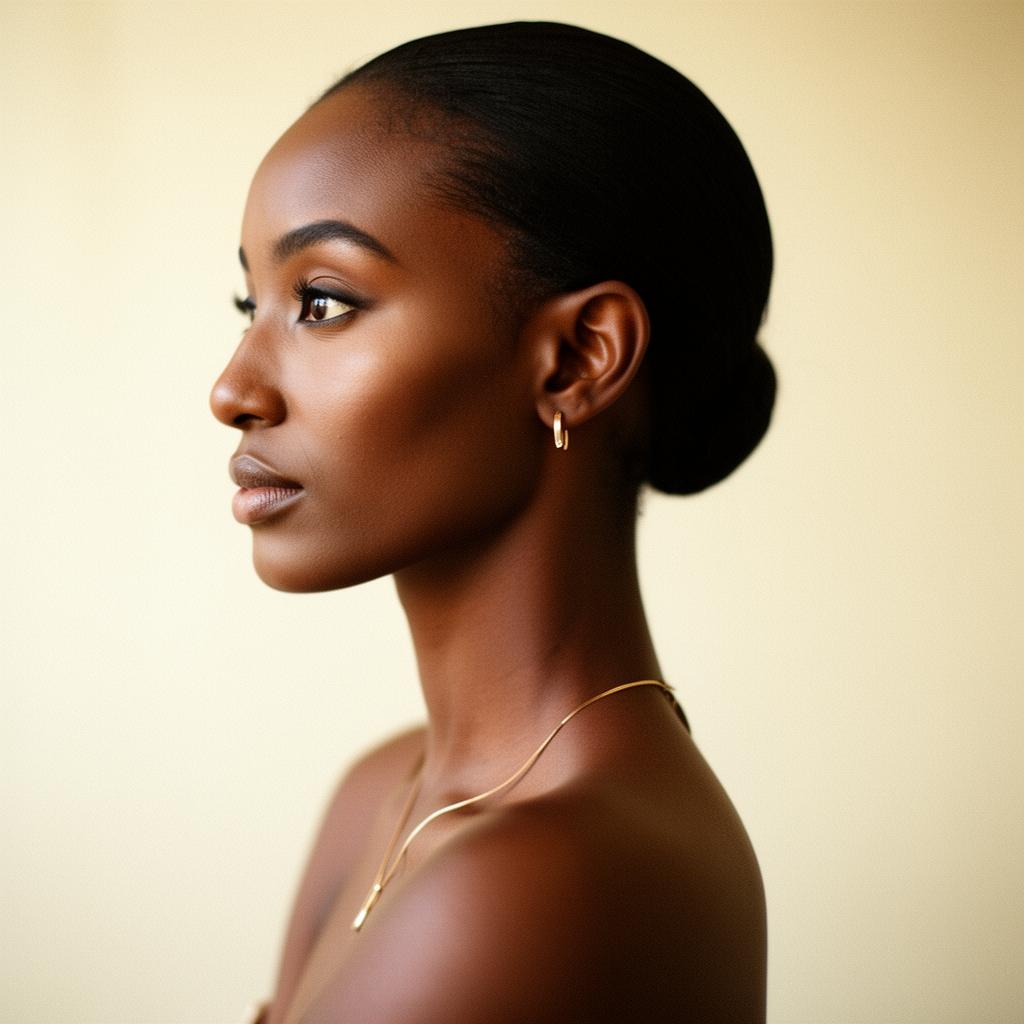
Laser hair removal is one of the most popular aesthetic treatments in the world. It is also one of the most misunderstood — specifically regarding who it works for, who it does not work for, and what the alternatives are for the significant portion of the population laser was never designed to serve.
If you have been told you are not a candidate for laser hair removal — because of your skin tone, your hair color, a medication you take, or a skin condition — this article is for you.
The Fundamental Limitation of Laser Hair Removal
Laser hair removal works by directing concentrated light energy at the melanin — the pigment — in the hair shaft. The heat from that light travels down the hair to the follicle and damages it, inhibiting future growth.
This mechanism has one non-negotiable requirement: contrast. The laser must be able to distinguish the pigment in the hair from the pigment in the surrounding skin. When that contrast is insufficient — because the skin is deeply pigmented, or because the hair has little to no pigment — the laser cannot target the follicle accurately.
The consequences of insufficient contrast range from ineffective treatment to burns, blistering, and permanent hyperpigmentation or hypopigmentation. This is not a flaw in any specific laser system. It is a fundamental limitation of the technology.
The clients laser cannot safely or effectively treat include those with Fitzpatrick skin types V and VI — medium-brown to dark skin — and those with blonde, red, gray, or white hair. These are not edge cases. They represent a significant portion of the population, and for decades they have had no effective permanent hair reduction option.
Epilfree is that option.
What Is Epilfree?
Epilfree is a patented European hair reduction system — developed and manufactured to European cosmetic standards — made entirely from natural botanical ingredients. It uses no light, no heat, no lasers, and no chemicals. It works through a completely different biological mechanism than laser, and that mechanism has no contraindications related to skin tone or hair color.
The active botanical complex includes Lady's Mantle, Eucalyptus, Usnea Barbata, and Boswellia Serrata — plant-derived compounds with documented effects on cellular division and follicular activity. These ingredients are applied directly to the open hair follicle immediately after hair removal, while the follicle is empty and clean. Because the follicle is empty, the botanical actives penetrate to the dermal layer and reach the dividing cells at the base of the hair shaft — the cells responsible for producing new hair growth.
Over a series of treatments, those cells lose their ability to produce hair. Permanently and progressively.
Why the Delivery Timing Is Everything
The mechanism of Epilfree depends entirely on follicle access. The botanical actives must reach the base of the follicle — the dermal papilla — to interrupt the cellular division process that produces hair. This is only possible when the follicle is empty.
This is why Epilfree is always applied immediately after hair removal — and why the hair removal step matters as much as the Epilfree step. At Amata Lucè™ we use Nufree Nudesse for hair removal — a 100% botanical, self-preserving formula originally developed for plastic surgeons preparing patients for surgery. Nufree never sticks to the skin, only to the hair. It is antibacterial and antimicrobial. And it leaves the follicle completely clean — the optimal condition for Epilfree to enter and begin working.
After Nufree removes the hair, we apply Finipil — an FDA-registered antiseptic that kills 99.999% of bacteria, cools the skin, and shrinks the empty follicle before Epilfree is applied. The follicle is protected, clean, and open. Then Epilfree goes in.
This three-step protocol — Nufree, Finipil, Epilfree — is not three separate products stacked together. It is one integrated system designed around the biology of the hair follicle.
Epilfree vs Laser — A Direct Comparison
Who Epilfree Is For
Epilfree is ideal for any client who has been told they are not a laser candidate — and for clients who simply prefer a natural, chemical-free approach to permanent hair reduction regardless of whether laser would technically work for them.
Specifically Epilfree is the right choice for clients with darker skin tones who want to avoid the pigmentation risks associated with laser treatment, clients with blonde red gray or white hair for whom laser is ineffective, clients who are photosensitive due to medication or medical condition, clients who want hair removal on the face where laser is not recommended for many skin types and tones, clients with tattoos over areas they want treated, and clients who have had laser treatment that did not produce complete results and want to address remaining hair.
There are no contraindications related to skin tone or hair color. The only requirement is that the hair can be removed from the root — which means waxing or threading candidates are Epilfree candidates.
What to Expect from a Treatment Series
A full Epilfree course consists of 8 to 12 sessions spaced 3 to 5 weeks apart — timed to align with the natural hair growth cycle. Hair grows in three phases: anagen (active growth), catagen (transition), and telogen (resting). Epilfree is most effective when applied to follicles in the anagen phase — which is why multiple sessions are required to capture all follicles as they cycle through active growth.
Most clients notice significant visible thinning after 3 to 4 sessions. Hair becomes finer, lighter, and slower-growing with each successive treatment. By the end of a full course most clients achieve 85 to 90% permanent reduction.
After the final session Epilfree must remain on the skin for 6 hours without washing, swimming, or heavy perspiration. This allows the botanical actives to fully absorb and complete their work in the follicle. After 6 hours resume your normal routine.
Results are considered permanent unless significant hormonal changes occur — pregnancy, menopause, or certain medications can stimulate dormant follicles. Annual maintenance sessions are available for clients who want to address any new growth that appears over time.
A Clinical Note from Gloria
The clients I am most grateful to serve with Epilfree are the ones who have spent years believing permanent hair reduction simply was not available to them. Clients with deeper skin tones who were told laser would not be safe. Clients with gray or blonde hair who were told nothing would work. Clients who tried laser anyway and experienced burns or pigmentation changes that took months to resolve.
Epilfree changes that conversation entirely. The technology works on every skin tone and every hair color because it does not use light or heat. It works with the follicle directly — botanical actives applied inside an empty follicle, interrupting the cellular process that produces hair. It is not a compromise or an alternative for people who cannot have the real thing. It is a different technology entirely — and for many clients it is the better option.
— Gloria Dawit-Puri, RN + Master Esthetician, Founder Amata Lucè™
References
On Laser Hair Removal — Mechanism (Selective Photothermolysis, Melanin Targeting)
- Laser Fitzpatrick Skin Type Recommendations. StatPearls. National Library of Medicine. https://www.ncbi.nlm.nih.gov/books/NBK557626/
- Greppi I. "Nd:YAG Laser Hair Removal in Fitzpatrick Skin Types IV to VI." Journal of Drugs in Dermatology. 2008. https://jddonline.com/articles/ndyag-laser-hair-removal-in-fitzpatrick-skin-types-iv-to-vi-S1545961613P0366X/
On Laser Limitations for Dark Skin — FST IV–VI Risk of Burns, Hyperpigmentation
- Alster TS, Bryan H, Williams CM. "Laser and Light Treatments for Hair Reduction in Fitzpatrick Skin Types IV–VI: A Comprehensive Review of the Literature." American Journal of Clinical Dermatology. 2017. https://pubmed.ncbi.nlm.nih.gov/28791605/
- Vachiramon V, McMichael AJ. "Lasers and Light-Based Therapies in Ethnic Skin: Treatment Options and Recommendations for Fitzpatrick Skin Types V and VI." British Journal of Dermatology. 2013. https://pubmed.ncbi.nlm.nih.gov/24098905/
- Methods to Overcome Poor Responses and Challenges of Laser Hair Removal in Dark Skin. Indian Journal of Dermatology, Venereology and Leprology. https://ijdvl.com/methods-to-overcome-poor-responses-and-challenges-of-laser-hair-removal-in-dark-skin/
On Laser Ineffectiveness for Blonde, Gray, White and Red Hair — Absent Chromophore
- Ibrahimi OA, et al. "A Randomized, Controlled, Double-Blind Study Evaluating Melanin-Encapsulated Liposomes as a Chromophore for Laser Hair Removal of Blond, White, and Gray Hair." PubMed. 2007. https://pubmed.ncbi.nlm.nih.gov/17452842/
- Methods to Overcome Poor Responses and Challenges of Laser Hair Removal in Dark Skin. Indian Journal of Dermatology, Venereology and Leprology. (see above — documents that "white and gray hairs have no melanin and are not known to respond to lasers")
On Hair Growth Cycle — Anagen, Catagen, Telogen
- Physiology, Hair. StatPearls. National Library of Medicine. https://www.ncbi.nlm.nih.gov/books/NBK499948/
- Almohanna HM, et al. "Integrative and Mechanistic Approach to the Hair Growth Cycle and Hair Loss." PMC. 2023. https://pmc.ncbi.nlm.nih.gov/articles/PMC9917549/
- Lv C, et al. "Morphogenesis, Growth Cycle and Molecular Regulation of Hair Follicles." PMC/Frontiers in Cell and Developmental Biology. 2022. https://pmc.ncbi.nlm.nih.gov/articles/PMC9133560/
On Lady's Mantle (Alchemilla vulgaris) — Cell Proliferation Inhibition
- Radojković M, et al. "Beyond Traditional Use of Alchemilla vulgaris: Genoprotective and Antitumor Activity In Vitro." PMC. 2022. https://pmc.ncbi.nlm.nih.gov/articles/PMC9740270/
- Šeklić D, et al. "Alchemilla vulgaris agg. (Lady's Mantle) from Central Balkan: Antioxidant, Anticancer and Enzyme Inhibition Properties." PMC/RSC Advances. 2022. https://pmc.ncbi.nlm.nih.gov/articles/PMC9075513/
On Boswellia Serrata — Anti-Inflammatory and Cellular Effects
- Siddiqui MZ. "Boswellia Serrata, a Potential Antiinflammatory Agent: An Overview." Indian Journal of Pharmaceutical Sciences. 2011;73(3):255–261. https://pmc.ncbi.nlm.nih.gov/articles/PMC3309643/
On the Dermal Papilla and Hair Follicle Cellular Division
- Physiology, Hair. StatPearls. (see above — documents dermal papilla function in controlling hair matrix cell division)
- Morphogenesis, Growth Cycle and Molecular Regulation of Hair Follicles. PMC. (see above — documents follicle base cellular division process)
Note on efficacy claim: The "85 to 90% permanent reduction" figure from a full Epilfree course is a manufacturer claim. Results based on manufacturer clinical data. Individual outcomes vary.
Sources available above. This article is written for educational purposes and does not constitute medical advice. Consult a licensed dermatologist or healthcare provider for diagnosis and treatment.